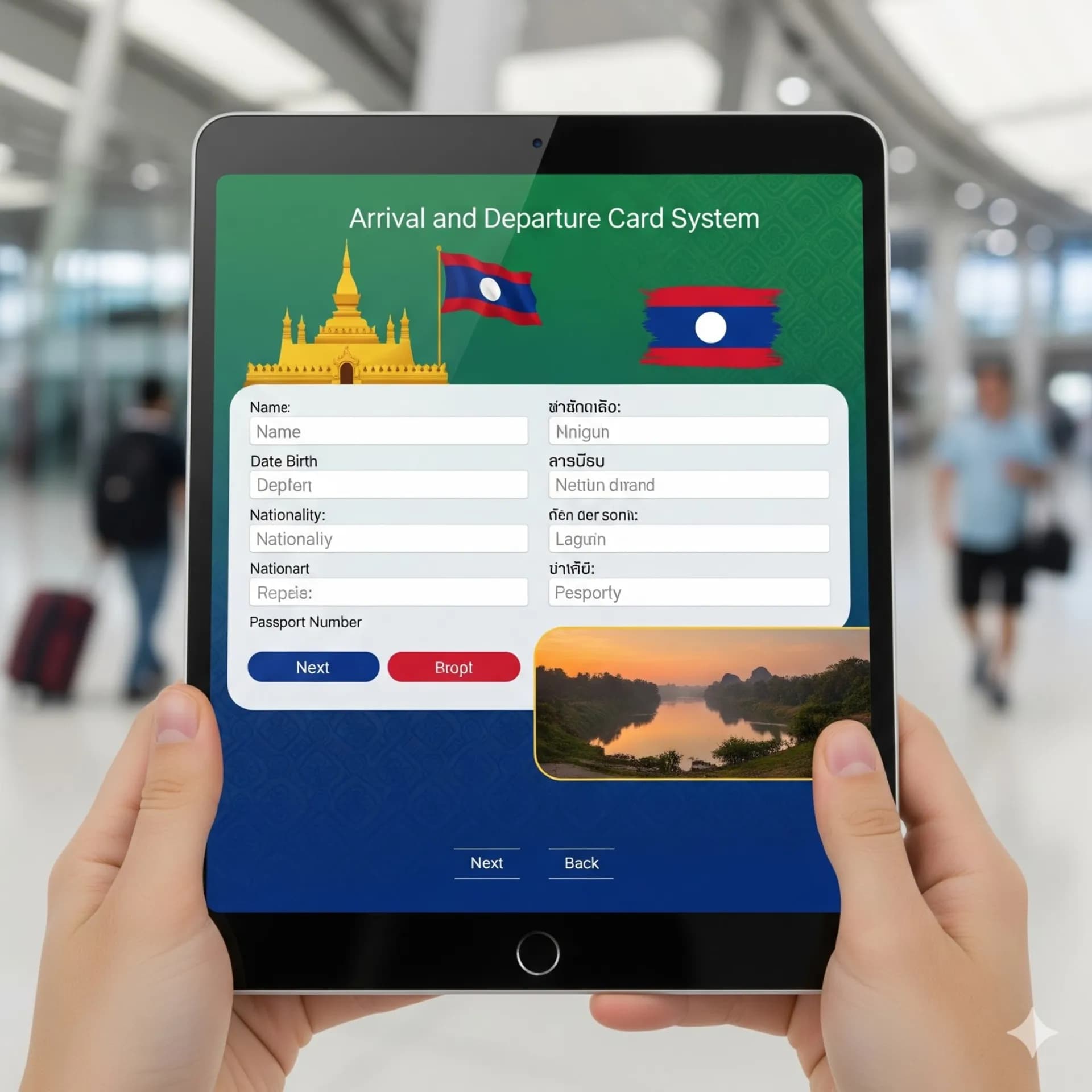
The Government of Laos has initiated a significant modernization of its border control procedures, introducing a new Digital Arrival Registration system to replace the traditional paper-based arrival and departure cards. This report provides a comprehensive overview of this new system, designed to serve as an authoritative resource for international travelers and the travel industry. The implementation is currently in a pilot phase at four key international entry points, with a full nationwide rollout planned for early 2026. A clear understanding of this new process is critical for ensuring a seamless entry and exit experience.
How to Complete the Digital Form
International travellers entering at one of the four designated pilot checkpoints must complete the digital form by following these five steps:
- Step 1: Verify Your Entry Point. The digital system is currently a pilot and is operational only at Wattay International Airport, Luang Prabang International Airport, Pakse International Airport, and the First Lao-Thai Friendship Bridge. All other border crossings will continue to use traditional paper forms.
- Step 2: Access the Official Portal. The only authorised website for this process is the official government portal:
www.immigration.gov.la. It is crucial to use this specific URL to avoid confusion with other government services. - Step 3: Complete the Form. The online form must be filled out for both arrival and departure. The submission must occur no more than three days before the date of travel.
- Step 4: Receive and Secure Your QR Code. Upon successful submission, the system will generate a unique QR code. You must save a digital copy on your mobile device and, for added security, print a physical copy.
- Step 5: Present the QR Code at Immigration. At the border, simply present the QR code to the immigration officer for verification.
At-a-Glance Fact Sheet
| Attribute | Details |
| Official System Name | Digital Arrival Registration System, or Lao Digital Immigration Form |
| Official Website | www.immigration.gov.la |
| Purpose | To replace the paper arrival and departure cards and enhance immigration efficiency |
| Timeline | Pilot Phase: September 1, 2025, to early 2026 Mandatory Nationwide Rollout: Beginning of 2026 |
| QR Code Validity | The generated QR code is valid for three days from the time of submission |
| Applicability | All foreign nationals entering and exiting Laos at the four pilot border gates |
| Exemptions (during pilot) | Lao citizens, foreign permanent residents, and Thai citizens using a Border Pass |
The Digital Arrival and Departure Card: A Step-by-Step Procedural Guide
Accessing the Official Portal: The Critical First Step
The most critical step in this entire process is correctly identifying and accessing the official government portal for the Digital Arrival Registration system. The official and only authorized website is www.immigration.gov.la. The existence of multiple government and third-party websites with similar names can create a significant point of confusion for international travelers. For instance, the official eVisa portal is
www.laoevisa.gov.la, and there are also numerous third-party services such as laoembassy.com and lao-evisa.com that offer visa-related services. A traveler conducting a casual online search for "Laos digital form" could easily be directed to a site for the eVisa, leading them to complete the wrong application or, worse, make an unnecessary payment. The lack of a clear, single-purpose online presence for all digital immigration services presents a challenge, and it is therefore incumbent upon travelers to verify the URL before proceeding. The URL
immigration.gov.la is the definitive source for the new arrival and departure card process.
Form Completion: Required Information and Data Fields
The online form for the digital card is designed to collect essential traveler and itinerary information. Accurate and precise data entry is paramount, as even minor discrepancies can lead to processing delays or rejection.
Personal Information
Travelers are required to provide personal details exactly as they appear on their passport. This includes the full name, gender, date of birth, and nationality. Minor errors, such as a misspelling (e.g., "Jonathon" instead of "Johnathon") or an incorrect date format (e.g., using MM/DD/YYYY instead of DD/MM/YYYY), can render the application invalid. A frequent and critical error is the mistyping of passport numbers, particularly the common confusion between the letter "O" and the number "0". It is essential for travelers to double-check every field before submission.
Travel Itinerary and Accommodation
The form requires travelers to submit detailed information about their planned journey. This includes the purpose of the visit, the intended arrival date, and the specific port of entry into Laos. The system also requires an accommodation address. An important procedural nuance is the requirement to complete a separate form for both the arrival and the departure leg of the trip. Both forms must be completed within the three-day window prior to travel.
Passport and Visa Information
Travelers must provide their passport details, including the passport number, issuance date, and expiry date. It is a standard requirement for all travelers that the passport must have a minimum validity of six months from the date of arrival in Laos.
The Final Submission and QR Code Generation
Upon completing the form and successfully submitting the required information, the traveler will receive a unique QR code. This QR code is the official confirmation of the digital registration and must be presented to border authorities upon arrival. The QR code is valid for three days, aligning with the window for pre-registration. It is strongly recommended that travelers prepare for their journey by saving a digital copy of the QR code on their mobile device and also printing a physical copy. This practice provides a crucial backup in case of phone malfunction, battery depletion, or lack of internet connectivity at the border, ensuring a smooth and uninterrupted transition through the checkpoint.