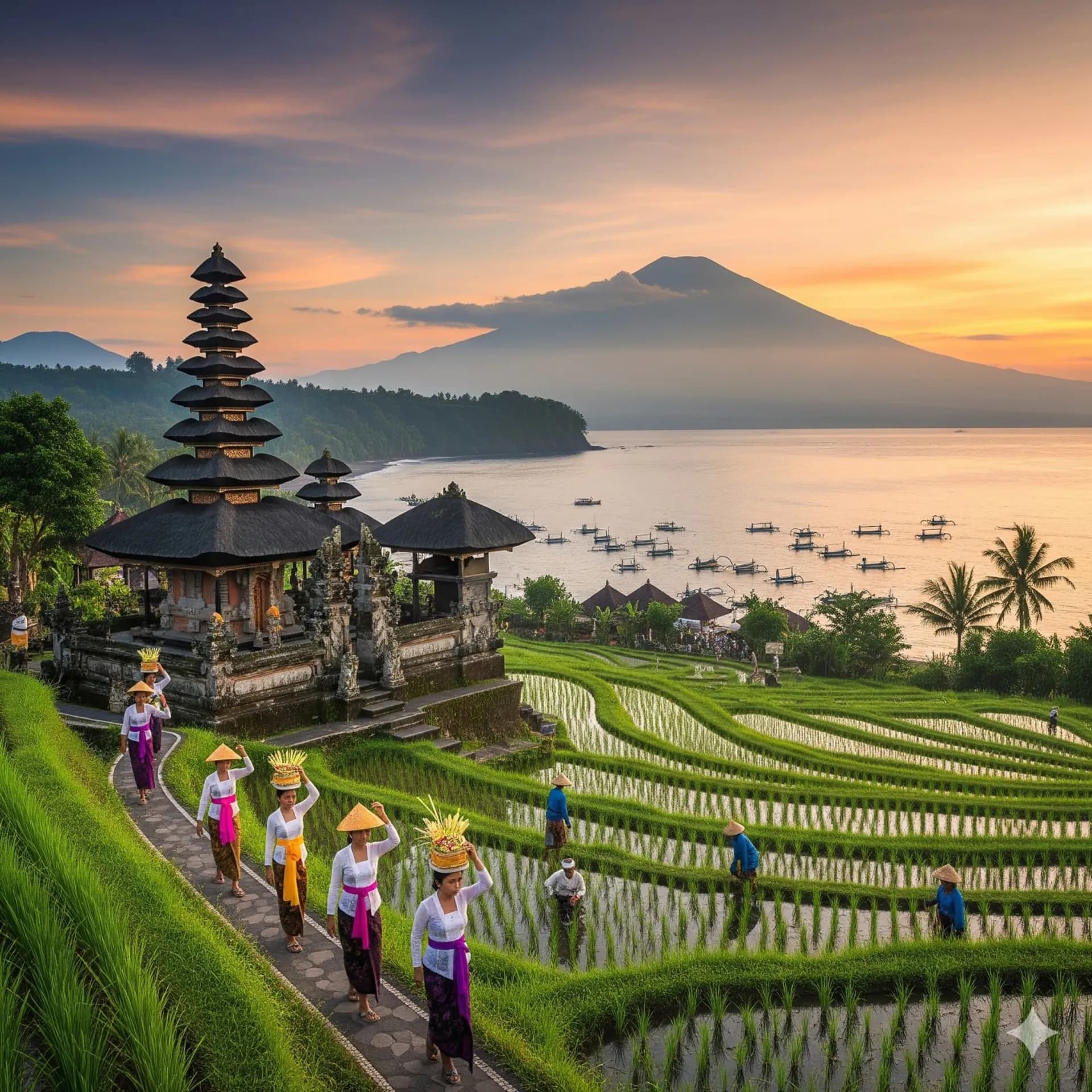
Receiving Bali visa is not enough for you to travel to Bali there are few other things that you need to consider before travelling to Bali. This guide will take you through the things that you need to take care before travelling to Bali.
The Arrival and Logistics Guide to Bali
Immigration and Customs: A Step-by-Step Guide for Denpasar Airport (DPS)
The arrival process at I Gusti Ngurah Rai International Airport (DPS) has been streamlined with the introduction of the new "All Indonesia" arrival card. As of September 1, this new digital platform is mandatory for all international passengers arriving at major Indonesian airports, including Denpasar. This application or online form serves as a unified digital declaration, consolidating immigration, customs, health, and quarantine declarations into a single submission. This new system replaces previous separate requirements like the SATUSEHAT health pass and the Electronic Customs Declaration (e-CD) form, which is a significant change designed to reduce paperwork and speed up entry procedures. The form can be completed free of charge up to three days before arrival via the official website, allindonesia.imigrasi.go.id, or the mobile app. A QR code is generated upon completion, which must be presented to immigration and customs officers.
Upon disembarking the aircraft, the arrival process unfolds in a clear sequence. First, travellers will pass through the health quarantine area. With the new "All Indonesia" card, the previously required SATUSEHAT health pass is no longer necessary; travellers simply need to have their QR code ready. Next, travellers will proceed to the immigration checkpoint. At this stage, they must present their valid passport, their visa or proof of visa-free status, and the QR code from the "All Indonesia" application. For travellers with an e-passport, there is an option to use the e-gates, which can further expedite the process.
After successfully completing the immigration process, the next step is baggage claim. Travellers should check the information screens to locate the correct conveyor belt for their flight. Trolley facilities are available, and for a small fee of 10,000 Rupiah per package, porters can assist with luggage. The final step before exiting the airport is the customs and excise process. Here, travellers will present the same QR code to customs officers. It is at this point that travellers must declare items such as plants, animals, or goods exceeding what is considered personal use. It is important to note that IMEI registration for mobile devices is not required for foreigners staying 90 days or less. Upon exiting customs, travellers will find themselves in the arrival corridor, where they can proceed to their pre-arranged transportation. It is highly advisable to pre-book a shuttle or a taxi to avoid the chaotic and often unregulated transport services that can try to take advantage of new arrivals.
Currency and Money Management: Cash, Cards, and Cautions
The official currency of Bali, and all of Indonesia, is the Indonesian Rupiah (IDR), which is often abbreviated as Rp. As of recent reporting, the exchange rate was approximately 16,472 Rupiah to one US dollar, though travellers should be aware that exchange rates can fluctuate.
When it comes to payment methods, Bali's economy operates with a dual system of cash and cards. Card payments, particularly with Visa and Mastercard, are widely accepted in tourist-heavy areas such as large hotels, restaurants, and shops. Some establishments in these areas may even accept contactless or mobile payments. However, cash remains an essential part of the Balinese economy. It is the primary form of payment for local markets, street food vendors, small local businesses, public transportation, and entry fees to temples. It is therefore highly recommended to carry a small amount of cash, perhaps the equivalent of 50 to 100 US dollars, for these incidental expenses.
When using ATMs, a few key practices can ensure safety and efficiency. It is a best practice to use ATMs located inside or attached to major bank branches like Mandiri, BNI, BCA, or BRI. These locations are typically monitored by CCTV and security guards, which significantly reduces the risk of card skimming or tampering. ATMs found in isolated areas, convenience stores, or at small, older-looking booths should be avoided. Most ATMs in Bali have a relatively low withdrawal limit, typically ranging from 1,250,000 to 2,500,000 Rupiah. It is possible to make multiple withdrawals to obtain a larger sum.
A critical tip for using ATMs is to always select the option to be charged in the local currency (IDR) when prompted. Choosing to be charged in your home currency will result in a poor exchange rate set by the local ATM network, leading to unnecessary fees. It is also important to note the order of operation at Balinese ATMs, as it can be different from Western ones. Many machines will dispense the cash first, followed by the card, so travellers must be patient and remember to retrieve their card after the transaction is complete.
Getting Around Bali: Choosing Your Ride
Bali offers a variety of transportation options, from app-based ride services to traditional taxis and private rentals. The most popular and convenient choices for visitors are the ride-hailing apps Grab and Gojek. These applications have established themselves as the dominant force in local transportation due to their transparent pricing and cashless payment options, which help travellers avoid the risk of being overcharged. Both platforms offer car and motorbike taxi services, known as GrabCar/GoCar and GrabBike/GoRide, respectively. For short trips or navigating heavy traffic, the motorbike option is often faster and more affordable. The pricing for these services is dynamic and can vary significantly between the two apps, which means it is often beneficial for travellers to check both platforms for the best rate before booking.
For those who prefer a traditional taxi, the most reputable and reliable company is Blue Bird. Blue Bird taxis are metered, which ensures that the fare is based on the official government-set rates. The current official base fee is 7,500 Rupiah, with a cost per kilometre of 7,250 Rupiah, and an additional fee for waiting time. Travellers should be cautious of unofficial taxis, which may attempt to overcharge by not using a meter or by negotiating an unfair price.
A significant number of travellers choose to rent a scooter for the freedom it provides to explore the island at their own pace. Scooter rentals are inexpensive, with daily rates ranging from 50,000 to 100,000 Rupiah. However, travellers should be aware that an International Driving Permit is required, and authorities have become stricter about enforcing this rule. For groups or families, renting a car with a driver is a popular and safer option than self-driving, as it offers comfort and allows visitors to avoid navigating Bali's often-chaotic traffic.
A Guide to a healthy and prepared trip
Health and Safety Preparation: Proactive Measures for a Healthy Trip
Proper health and safety preparation are paramount for a trip to Bali. A consultation with a travel health professional is recommended well in advance to ensure all routine vaccinations, such as for tetanus and diphtheria, are up to date. Travellers should also consider additional vaccines, particularly for Hepatitis A, Hepatitis B, Typhoid, Rabies, and Japanese Encephalitis. These are advisable to protect against common risks in the region, including food and waterborne diseases, animal contact, and mosquito-borne illnesses, especially when visiting rural areas or staying for an extended period.
A comprehensive first-aid kit is another essential item to pack. This kit should contain any essential personal medications, as well as basics like a diarrhoea treatment kit, bandages, paracetamol, and ibuprofen. Given Bali's tropical environment, a high-SPF, waterproof sunscreen and mosquito repellent containing DEET are indispensable. Bringing a mosquito repellent plug for accommodations can also help prevent insect-related discomfort.
A particularly crucial and often overlooked aspect of travel preparation is the legal status of prescription medications. Some medications, including those for ADHD and all cannabis-based products (even medicinal), are illegal in Indonesia, and penalties can be severe, including jail time. Travellers should not assume that because a medication is legally prescribed in their home country, it is permissible in Indonesia. The legal framework is different, and this can have serious repercussions. It is a prudent measure to check the legality of any medication with an Indonesian embassy or consulate before departure.
Finally, the importance of comprehensive travel insurance cannot be overstated. A robust policy should cover medical treatment and, critically, emergency medical evacuation, which can be prohibitively expensive without coverage. Travellers engaging in activities like bungee jumping, rafting, or scuba diving should also carefully review their policy to ensure these adventure sports are covered. This proactive approach to health and safety is a fundamental pillar of a secure and enjoyable journey.
The Ultimate Bali Packing List: Beyond the Beachwear
Packing for Bali's tropical climate requires a balance of practicality and cultural sensitivity. The year-round warm and humid weather calls for light, loose, and breathable clothing made from materials like cotton. A hooded sweatshirt or light jacket is useful for cooler evenings or excursions to inland, mountainous areas like Ubud or Gunung Batur. While the standard of dress in tourist areas is casual, a light rain jacket is a practical item to have on hand, especially during the wet season from October to March.
Footwear should be chosen for comfort and versatility. Comfortable sandals or flip-flops are perfect for the walkable tourist centres and a necessity for beach days. Shoes that are easy to slip on and off are a smart choice, as it is customary to remove shoes before entering homes and some temples. For more adventurous activities such as hiking or exploring slippery paths, a pair of enclosed shoes like trainers or hiking boots is recommended.
Beyond clothing, a few key items should be on every traveller's list. A fully unlocked smartphone is essential for using a local SIM card, which provides access to data for navigation and ride-hailing apps. A universal travel plug adapter and a power bank are also vital for keeping devices charged. A dry bag or a waterproof phone case is highly useful for protecting electronics from the frequent rain or water-based activities.
A critical consideration for an efficient packing strategy is to travel light and leverage local services. Laundry services in Bali are inexpensive and widely available at hotels and local laundries, so there is no need to pack a large number of clothes. Furthermore, many items can be easily and affordably purchased on the island. Items such as swimwear, hats, sunglasses, and sandals are plentiful in local markets and shops. Conversely, there are certain items that should be left at home. Expensive jewellery should be avoided to prevent loss or theft. It is a serious legal offence to bring in items such as weapons, pepper spray, or, most critically, drugs, which can carry the death penalty in Indonesia. Travellers planning to snorkel should also leave their gear behind, as it can be easily and inexpensively rented or purchased in Bali.
Cultural Immersion and Practical Know-How
A Guide to Local Customs and Etiquette: Respectful Travel
Engaging with Balinese culture requires a deep sense of respect and an understanding of local customs. The Balinese are generally tolerant and welcoming, but in response to some recent tourist behaviour, the government has issued an official list of do's and don'ts that travellers must adhere to.
In day-to-day interactions, a few gestures are particularly important. It is customary to use the right hand for giving and receiving money or gifts, as the left hand is considered impure. Pointing with a finger is considered rude; instead, one should beckon someone with a hand extended, fingers pointing downward. The head is considered the most sacred part of the body, and touching someone's head, even a child's, is a serious social transgression that can lead to a confrontation. It is also considered impolite to lose one's temper, as the Balinese value a calm and polite demeanour.
When visiting temples and sacred sites, a strict dress code must be followed. Both men and women are required to cover their shoulders and legs, typically with a sarong and a sash, which are often available for rent at the temple entrance. It is also disrespectful to step on the small daily offerings (canang sari) that are placed on pavements and in front of homes. The Governor's official list of guidelines explicitly states that visitors must respect temples and sacred structures, and for women, this includes a specific rule not to enter sacred areas while menstruating. Photography is generally permitted, but flash photography inside sacred places is considered rude and should be avoided.
Staying Safe and Healthy in Bali
A key component of a successful trip is prioritising health and safety by taking proactive steps to mitigate common risks. One of the most prevalent health issues for visitors is "Bali Belly," a colloquial term for traveller's diarrhoea. The best way to prevent this is to be cautious with food and water. It is unsafe to drink tap water in Bali, so only bottled or filtered water should be consumed, even for brushing teeth. When eating street food, it is a prudent practice to choose vendors who prepare the food fresh in front of you.
A more severe and potentially fatal risk is methanol poisoning, which has been reported in Bali and Lombok. Unregulated alcoholic beverages, particularly cocktails and homemade spirits, can be contaminated with methanol. As little as a single shot can be fatal, and a delay in seeking medical attention can lead to permanent disability or death. It is critical to be cautious with alcoholic drinks and to only consume them at reputable, licensed establishments. If methanol poisoning is suspected, urgent medical attention is required.
Travellers should also be mindful of the natural environment. The sun can be intense, so wearing a hat and high-SPF sunscreen is essential, as is staying well-hydrated. When encountering wildlife, caution is advised. Both stray dogs and monkeys can carry diseases like rabies. In areas like the Ubud Monkey Forest, monkeys can be aggressive, so it is important not to feed them or provoke them, and to keep belongings secured. Marine safety is another serious concern. Many beaches are unpatrolled and have strong rip currents that have been responsible for drownings. Swimming should only be done in designated areas.
For travellers who plan to use a drone, it is important to be aware of the specific regulations. For recreational purposes, a licence is not required, but strict rules apply. Drones should not be flown above 150 metres, within 15 kilometres of an airport, or over crowds. From a cultural standpoint, flying a drone over temples is strictly forbidden without prior permission from temple authorities, which may require a donation. Respect for cultural and religious sites is a key part of avoiding legal and social problems.
Key Emergency Contacts
For a comprehensive approach to safety, it is prudent to have a list of emergency contacts readily available.
| Service | Phone Number |
| Police | 110 |
| Ambulance | 118 |
| Tourist Police | 0361 224111 |
| Medical Emergency | 0361 711366 |
Best Places to Visit in Bali
Bali is a destination of remarkable diversity, offering an extensive range of attractions that cater to every interest.
Temples and Spiritual Sites
- Pura Ulun Danu Beratan: Located in the Bedugul highlands, this iconic temple appears to float on the waters of Bali's second-largest lake. The serene landscape, with Mount Catur and Mount Beratan in the background, is so beloved it is featured on the Indonesian 50,000 Rupiah bill.
- Pura Lempuyang: Known as the "Gateway to Heaven," this ancient temple is perched atop Mount Lempuyang. The climb to the top involves 1,700 steps, but the literal gateway at the summit provides a stunning and famous photo opportunity.
- Pura Tirta Empul: A sacred water temple famous for its holy springs. Visitors can participate in the melukat, a traditional water purification ceremony.
- Pura Uluwatu: This temple is majestically perched on a cliff 70 metres above the Indian Ocean. It is a premier location to watch the sunset and witness the traditional Kecak fire dance, performed in the temple's amphitheatre.
- Goa Gajah: Also known as the “Elephant Cave,” this ancient man-made cave was used as a ritual site. The entrance is a stone carving resembling an elephant, and visitors can explore its inner chamber.
Natural Wonders and Adventure
- Gunung Batur: An active volcano and one of Bali's most popular hiking destinations. The pre-dawn trek takes 2 to 3 hours to reach the summit in time for a breathtaking sunrise.
- Tegalalang Rice Terraces: This location near Ubud is a must-visit for its stunning landscape of vibrant rice paddies. Visiting at sunrise offers the best light for photography and helps avoid crowds.
- Jatiluwih Rice Terraces: Located in the Tabanan region, this area showcases Bali's ancient and UNESCO-recognised subak irrigation system. Visitors can walk or cycle along the terraces and interact with local farmers.
- Tegenungan Waterfall: Situated in Gianyar, this is the waterfall closest to the main tourist areas of Kuta and Seminyak. A 30-minute drive from Denpasar, it is easily accessible.
- Kanto Lampo Waterfall: Found in the Gianyar rainforest, this waterfall is recognised for its unique, stepped rock formation, which creates a mesmerising cascade effect.
- Marigold Fields in Besakih: The region of Besakih, located north of Denpasar, is home to sprawling fields of marigolds (bunga gemitir) used in daily Balinese Hindu offerings. The fields provide a perfect backdrop for photographs.
Beaches, Islands, and Coastal Life
- Nusa Islands: A group of three stunning islands - Nusa Penida, Nusa Ceningan, and Nusa Lembongan - located a short boat ride from Bali. Nusa Penida is particularly popular for snorkelling with manta rays and visiting the iconic Kelingking Beach.
- Lovina: A small town on the northern coast, known for its black sand beaches and the opportunity to take a boat tour to see pods of dolphins at sunrise.
- Suluban Beach: Part of the Uluwatu region, this beach is globally renowned for its surf break and attracts surfers from around the world. It is also a popular nightlife spot, with the Single Fin bar located just above.
- Melasti Beach: Also in Uluwatu, this beach is known for its beautiful turquoise waters and safe swimming conditions, framed by dramatic limestone cliffs. It is a great spot for watching the sunset.
- Green Bowl Beach: A secluded and quiet beach in Ungasan, this is one of Bali's shortest beaches, featuring a large limestone cave for shade. It requires a descent of hundreds of steps to reach.
Cultural Hubs and Nightlife
- Ubud: Considered the cultural heartland of Bali, Ubud is a hub for yoga, art, and landscapes. It is an excellent place for those interested in local culture, art, and beautiful scenery.
- Ubud Art Market: Located on the main road, this market is a treasure trove of local crafts and souvenirs. Visitors can find a wide range of traditional items, from hand-carved goods to rattan bags and handwoven fabrics.
- Desa Penglipuran: Located in the Bangli region, this village was named the world's cleanest village by UNESCO in 2016. For a small fee, visitors can experience the traditional Balinese way of life.
- Garuda Wisnu Kencana Cultural Park: This park features the magnificent Garuda Wisnu Kencana statue, one of the world's tallest monuments at 121 metres. The park offers an opportunity to explore Balinese art and culture, and a lift takes visitors to the 23rd floor for panoramic views of the Uluwatu peninsula.